Peru: Trekking the Hidden Inca… (trip)


Peru: Trekking the Hidden Inca Trail
- Cusco Airport, Peru
- Active & Adventure
“"Challenging, breathtaking, and beautiful. Boundless Journeys' guides are the BEST! They made the trip unforgettable." ”
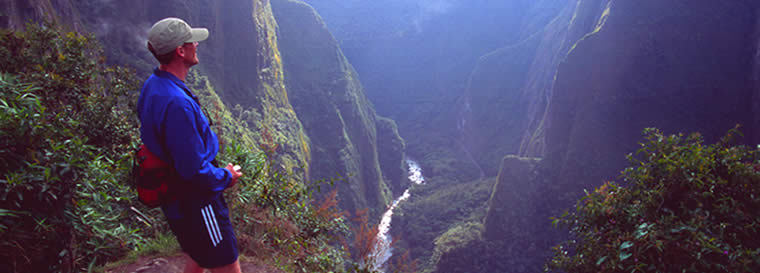
| from $3,995* per person | 11 Days | April-December |
| Comfort accommodations | Exertion level: 3 | |
| Operator: Boundless Journeys | 16 people max | |
Loading map, please wait...
Locations visited/nearby
South America , Peru , Machu Picchu , Cusco , Lima , Sacred Valley , Ancascocha , Salkantay , Andes , Urubamba , Aguas Calientes , Yucay , Inca Trail, Peru, South America
1 testimonial about this trip
-
Reviewer: W. Cleary
located in
Morrisville,
VT
USA
"Challenging, breathtaking, and beautiful. Boundless Journeys' guides are the BEST! They made the trip unforgettable."
3 testimonials about the provider, Boundless Journeys:
-
Reviewer: S. Schantz
located in
Ponte Vedra Beach,
FL
USA
"My praise for the experience I had on my Boundless Journeys adventure in the Canadian Rockies is¦well, boundless! The trip was meticulously planned and implemented with the utmost professionalism. The guides were truly superb and every facet of the trip was outstanding. I expect to be on another Boundless Journeys trip very soon!!"
-
Reviewer: M. Thompson
located in
El Paso,
TX
USA
"One of the best managed and most enjoyable trips I've ever taken!"
-
Reviewer: G. Gehr
located in
Andover,
MA
USA
"The trip was everything we hoped...beautifully planned and even better than your advertisements! Nicky herself is an absolute jewel! She is simply amazing in her knowledge of the natural world, as a tour leader and as a group leader. She is simply superb in every way! One of the most memorable human beings I have ever met."
Itinerary
DAY 1Arrival to Cusco; afternoon city tour
Walk – easy, 3 hours.
You'll begin your exploration of the land of the Incas in the city of Cusco (11,150’), a name taken from the Quechua word for “naval” or “center.” Here, dramatic Spanish colonial architecture blends with solid Inca masonry in a harmony belying the area’s tumultuous history. Throughout the city are prime examples of colonial buildings that are built on top of ancient Inca foundations. The stonework of the Incas is unsurpassed by that of any other culture. Massive rocks were painstakingly ground to fit so perfectly together that no mortar was needed, and many walls have remained for over 500 years in spite of regular tremors. This afternoon you'll enjoy a walking tour of the city’s historic center with your guide, who lays the foundation for for understanding of the Inca way of life that you will encounter in the coming days. This afternoon you'll have time to relax before dinner at a favorite local restaurant.
Hotel Novotel, Cusco. Lunch and dinner included.
DAY 2
Tambomachay to Sacsayhuaman
Hike – easy to moderate, 3-4 hours on hiking trails; approximate elevation loss of 1,000’.
Outside Cusco, the landscape quickly becomes agricultural. We drive to the ruins of Tambomachay, or El Baño del Inca. This ancient ceremonial bath marks the beginning of our first acclimatization hike (beginning at about 12,500’), through scenic farmland and past the archeological sites of Pukapukara and Q’enqo, and finally reaching the impressive Sacsayhuaman, where we encounter our first example of the huge boulders the Incas used in building temples and fortresses. Along the way, we enjoy views of the Cusco valley and snowcapped Andean peaks in the distance.
This evening you are free to further explore Cusco, and your guide will be happy to make recommendations from the diverse and excellent eateries in the area, or you may choose to enjoy dinner at our hotel’s fine restaurant.
Hotel Novotel, Cusco. Breakfast and lunch included.
DAY 3
Pisac and the Sacred Valley
Hike – easy to moderate, 2-4 hours on trails with some stone stairs; approximate elevation loss of 1,800’.
This morning we leave Cusco and head for the Sacred Valley. As we enter the valley, it is evident why this area was an important cultural and agricultural region for the Incas. The climate is pleasant, and generally is a bit warmer than Cusco due to its lower elevation (about 9,300’). Crops flourished here, and ancient terraces remain in testament to the fertility of the land. At Pisac, we begin today’s hike. The well-preserved ruins above the town offer excellent views and further insight into the spiritual life of the Incas. After exploring Pisac, we may hike from the ruins into the town 1,800’ feet below, where we visit the local market and have the opportunity to bargain for pottery and colorful Peruvian weavings.
Later this afternoon, we arrive at the hotel were we’ll be staying for the next two nights, a charming country lodge on the site of a restored 350-year-old monastery.
Posada del Inca, Yucay. All meals included.
DAY 4
Mountain Village and Ollantaytambo
Hike – easy to moderate, 4-5 hours on dirt roads and trails; some steep stone stairs at ruins.
Today we begin our hike in a mountain village near the town of Ollantaytambo. After a short visit to the local school, we depart Patacancha on foot, passing through the small village of Huillac. Taking our time on foot allows us a glimpse of the agricultural life the campesinos have lived for centuries, growing wheat and potatoes, and raising sheep and guinea pigs. We pass through remote areas where we may see isolated herds of llama or alpaca roaming amid the patchwork of cultivated fields.
After a picnic lunch we return to Ollantaytambo, a charming town of cobblestone streets, ingenious aqueducts, and colorful market stalls at the base of an impressive ruin. Exactly how the Incas moved the rose colored stone blocks from their quarry miles away is a mystery to this day. It is here at a narrow part of the valley where the Incas managed for some time to stave off the Spanish conquest. By using their canals to flood the valley floor, they were able to prevent the invaders’ advances.
Tonight we enjoy a hearty dinner and a restful evening in preparation for our trek.
Posada del Inca, Yucay. All meals included.
DAY 5
Begin trek: Parpishu to Chilipahua
Hike – moderately strenuous, 5-6 hours.
Beginning elevation: 10,000’
Highest elevation: 12,800’
End/Campsite elevation: 11,500’
Our trek begins in the Pumatales Valley, a deep gorge spliced by the Rio Huarocondo. The ancient trail, still used today by goat, sheep, and cattle farmers, ascends steadily toward the Watuq’asa pass. We take our time, stopping now and then to appreciate the amazing views of Mt. Chicon (17,500’), Mt. Verónika (18,641’) and Mt. Pumahuanca (17,500’). As we approach the pass, the Inca walls of Qosqoq’awarina come into view. At the head of the pass we enjoy lunch amid the ruins. After our meal there is time to relax or climb the last 300 feet to the top of the ancient watch tower, where 360˚ views reward our efforts. Continuing on, we descend into the valley of Anapahua, where lush green terraces replace the dry landscape we saw at the beginning of the day. This afternoon we arrive in Chilipahua, a tiny hamlet where we make our camp. As the farmers gather their livestock from the surrounding hills, children from the nearby farms may try to tempt you to kick a soccer ball around before sunset.
Full service camping. All meals included.
DAY 6
Chilipahua to Ancascocha
Hike – strenuous, 5-6 hours. Beginning elevation: 11,500’
Highest elevation: 14,750’
End/Campsite elevation: 12,700’
At dawn, our camp chefs wake us with steaming cups of coca tea brought to our tents. The ubiquitous dried coca leaves make a wonderful tea that provides energy at high altitudes – the reason for its immense popularity among those living in the mountains of Peru. There is time to wake up gradually, feeling the early sun warm our tents. After a breakfast of granola, yogurt, and eggs or maybe pancakes, we begin our hike while our arrieros (horse handlers) break camp and pack the horses. Our trail gradually ascends to the Pampaq’asa pass, and along the way we are likely to meet local farmers bringing potatoes to the lower villages to trade for rice and sugar. After about an hour, we take a break for a snack of fruit, chocolate, and nuts before continuing up through the farmland to the pass. Here, at 14,750’, we are at the highest point of our journey. To our right, a hidden valley, the remains of a glacial lake, is now a perfect grazing land for horses.
As we clear the pass, the landscape changes entirely. Before us lies a beautiful valley and the tumbling waters of the Rio Silque. After descending steeply from the pass, we enjoy a well-deserved lunch – perhaps homemade soup and freshly prepared salads – on the bank of the river. Local children often bring their flocks of sheep to graze nearby, and we enjoy the idyllic setting with them, watching for caracara hawks and majestic Andean condors circling overhead.
We next gently descend through pastureland populated by sheep, cows, and horses. These animals and the occasional inquisitive Quechua child are often the only witnesses to our presence. Looking north, we are treated to dramatic views of the snowcapped peak of Verónika, beautifully framed by the green valley.
We arrive to our waiting tents on the flanks of Mt. Huayanay (17,500’), whose glaciers hang above the valley floor, feeding the river running by our camp.
Full service camping. All meals included.
DAY 7
Ancascocha to Camicancha
Hike – moderate to strenuous, 5-6 hours.
Beginning/Highest elevation: 12,700’
End/Campsite elevation: 9,700’
By now we are accustomed to the morning chill disappearing by breakfast as the sun warms the mountains. Today’s hike is a bit easier, as we start trekking down through a narrow valley, full of red Masdevallia orchids, known locally as huakanki. Our trail threads across several bridges over a small mountain river.
As we make our way across fields of rocky scree, going up and down, we enjoy nearly constant views of impressive Mt. Verónika across the Sacred Valley. After lunch at a scenic resting spot, we continue to descend. We eventually enter a eucalyptus grove, captivatingly lush after days spent above tree line in the mountains. By mid-afternoon, we arrive at the tiny community of Camicancha, where we will camp tonight. Local children, as always, are eager to greet us and share some of their produce.
Full service camping. All meals included.
DAY 8
Camicancha to Piscaycucho
Hike – easy to moderate, 5-6 hours.
Beginning elevation: 9,700’
Highest elevation: 9,700’
End/Campsite elevation: 8,975’
This morning we find ourselves slowly re-entering civilization. Our route follows a wide, relatively flat dirt track along the Rio Silque before narrowing again. We pass the occasional home, slightly more complex than the simple dwellings we’ve encountered in the past days.
Our trail follows the contours of the Sacred Valley, winding through eucalyptus groves and hillsides boasting impressive cacti. Everywhere, signs of the intense farming during Inca times can be seen in the many terraced fields.
By mid-afternoon, we reach our final camp site at Piscaycucho on the Urubamba River. Here, we may meet other trekkers and compare stories of our travels. We camp in relative luxury tonight, with complete indoor dining facilities, hot showers, and even a sauna to revive weary muscles!
Full service camping. All meals included.
DAY 9
Piscaycucho to Machu Picchu
Hike – moderately strenuous, 6-7 hours.
Beginning elevation: 6,259’
Highest elevation: 8,860’
End elevation: 7,970’
Our trek ends today hiking the final miles into Machu Picchu on the classic Inca Trail. We begin with a scenic train ride from Piscaycucho to the start of our hike. Our train has large windows and a glass ceiling, allowing everyone to enjoy amazing views of the Andes rising precipitously above us. After about 40 minutes, we disembark at kilometer 104, and begin the final hike of our trek. We soon come upon Chachabamba, a small Inca village in ruins. Our trail continues to climb, switching back and forth across the steep hillside. The views are spectacular, and we may begin to recognize some of the steep, forest covered mountains that surround Machu Picchu, although the lost citadel remains out of sight.
After 3-4 hours, the trail becomes more forested and we turn a corner to see the picture-perfect ruins of Wiñya Wayna before us. We take time to have lunch at the ruins, and marvel at the ingenuity of the people who created this complex village in such an unlikely place. From Wiñya Wayna, the trail begins to evoke a sense of history; ancient stone steps, pavements and complex retaining walls, still half covered with vegetation, surround us. A final steep ascent brings us to Intipunku (the Gate of the Sun), and as we come through the gate, the first unforgettable sight of Machu Picchu emerges below us. We have a few hours this afternoon to explore the lost city on our own or with our guides, or you may simply choose to find a quiet spot from which to soak in the splendor.
Late this afternoon we board a bus for a short ride to our award-winning hotel in the festive small town of Machu Picchu, where we enjoy a feast in celebration of accomplishing our trek.
Machu Picchu Pueblo Hotel, Machu Picchu Pueblo. All meals included.
PLEASE NOTE: It is important to sign up early, as the Peruvian government has a new permit system in place which strictly limits the number of hikers on the trail at any given time. Permits are issued without priority on a first-come, first-served basis. If you dream of hiking into Machu Picchu on the Inca Trail, now is the time to reserve. There are alternative options if permits are not available at the time when you reserve. This will not affect our visit to Machu Picchu, just the hike to the ruins.
DAY 10
Sunrise at Machu Picchu; exploration of ruins; return to Cusco
Walk – easy, 2-3 hours, optional moderate hike to Wayna Picchu, about 3 hours.
For those who wish to rise early, a very special experience is in store this morning. We return to Machu Picchu before sunrise, so that we can quietly enjoy the ruins before the crowds begin to arrive later in the morning. There is plenty of time to learn more about the complexities of this mountaintop city, or you may choose to challenge yourself to a final hike up Wayna Picchu, the dramatic spire that rises in the background of every classic photograph of the famed citadel.
Later, we descend to the town of Machu Picchu for lunch before boarding the Vistadome train to return to Cusco. The ride takes a few hours, giving us plenty of time to relax, enjoy the views, and reflect on our journey before a final celebratory dinner in Cusco.
Hotel Novotel, Cusco. All meals included.
DAY 11
Departure from Cusco
After breakfast we transfer to the Cusco airport in time for flights to Lima and homeward.
Breakfast included.
More information from Boundless Journeys:
- View trip on provider's website
www.boundlessjourneys.com/tours/peru-custom-tours/… - Company profile, experience, and history
- View all of their trips
- Email this trip page to a friend
-


Comments from Facebook