Appian Way, Queen of Roads (trip)


Appian Way, Queen of Roads
- Baths of Caracalla, Rome, Italy
- Active & Adventure
| from €130* per person | 4 Hours | July, August |
| Comfort accommodations | Exertion level: 4 | |
| Operator: Context Travel | 12 people max | |
Loading map, please wait...
Locations visited/nearby
ancient Rome , Appian Way, Italy, Europe
0 testimonials about this trip.
3 testimonials about the provider, Context Travel:
-
Reviewer: Norman Aroesty
located in
Rochester,
NY
USA
There was no comparison between a Context tour and the other tours that I saw people on. We feel very fortunate to have used Context.
-
Reviewer: John and Darlene Skellion
located in
Rifle,
CO
USA
Our docents were so knowledgeable and gave us so much insight into what we were seeing a truly enjoyable and educational experience! We have recommended you to everyone we talk with about taking tours, etc. We will definitely be signing up for more tours when we return to Italy. Thank you for helping make a lot of wonderful memories!
-
Reviewer: Victoria
located in
New Orleans,
LA
USA
The docents were extraordinary! It has been a long time since I have met such talented, educated, and intelligent young people.
Special information
- This is a custom departure, meaning this trip is offered on dates that you arrange privately with the provider. Additionally, you need to form your own private group for this trip. The itinerary and price here is just a sample. Contact the provider for detailed pricing, minimum group size, and scheduling information. For most providers, the larger the group you are traveling with, the lower the per-person cost will be.
- May accommodate certain types of disabilities. Contact the operator for more information.
Itinerary
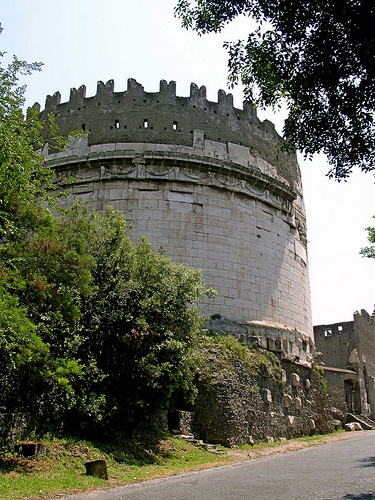
We begin at the Baths of Caracalla, constructed along a stretch of the Appian Way in 221 AD. Besides its architectural splendor, this complex also gives us a chance to discuss the use of baths as a social and political tool for the Emperor. We then take a private car, which transports us to the Appian Way, where we disembark and stroll for the remainder of the itinerary.The building of temples, altars, arches, funerary tombs, and other public structures along the sides of the road contributed in a clear manner to the monumental transformation of the Via Appia. Becoming more opulent as time passed, they give us a good sense of how the Roman elite expressed their social and political status. The exact monuments on the Via Appia visited can vary, but we normally stop at the Mausoleum of Cecilia Metella, built for the daughter of a wealthy Roman patrician, and the Circus of Maxentius, which once contained the obelisk now in Piazza Navona. The itinerary reinforces the knowledge that these monuments, located on the outskirts of Rome, were a constant reminder to travellers approaching and leaving the city of which citizens mattered inside its walls. The periphery of the Via Appia was a mirror of the center of Rome.
More information from Context Travel:
- Email this trip page to a friend
-


Comments from Facebook